

Nobody plans for it. Maybe it was a back molar that finally gave up after years of trouble. Maybe an accident in the wet season that nobody saw coming. Maybe just the slow, quiet reality of ageing. However it happened, you’re now sitting with a gap in your mouth — and a head full of questions.
Sometimes tooth loss happens gradually — a crown that finally gives way, decay that’s been brewing for years. Other times it’s sudden, and the pain doesn’t wait for a convenient hour. Either way, the immediate discomfort eventually settles. And when it does, the bigger question surfaces: what do you actually do about the gap?
Two words keep coming up: implants and dentures. And here’s where most people get stuck — not because the information isn’t out there, but because it’s either too clinical to follow or too sales-y to trust.
Here’s an honest, side-by-side breakdown of dental implants vs dentures — what each one actually feels like to live with, what they do (and don’t do) for your long-term health, and how to figure out which one makes sense for you.
First, What’s the Actual Difference?
Before comparing them, it helps to understand what each option is doing in your mouth.
Dentures are removable appliances — either full (replacing an entire arch of teeth) or partial (filling gaps between remaining teeth). They sit on top of the gumline and are held in place by suction, clasps, or dental adhesive. They’ve been around for centuries, they’ve improved enormously, and for many people they remain a perfectly valid solution.
Dental implants are a different proposition entirely. A titanium post is surgically placed into the jawbone, where it fuses with the bone over several months through a process called osseointegration. A ceramic crown is then fitted on top. The result is a fixed, permanent tooth replacement that functions — and looks — almost exactly like a natural tooth.
One sits on your jaw. The other becomes part of it. That distinction matters more than most people realise.
The Comparison That Actually Matters: Side by Side

Comfort, Confidence, and Daily Life
This is where the gap between the two options is most felt.
With dentures, there’s an adjustment period — sometimes a lengthy one. Sore spots are common as the appliance settles. Many wearers find certain foods off-limits: tough meats, crunchy vegetables, anything that requires real biting force. Speech can be affected, particularly in the early weeks. And many people quietly worry — at a dinner out, in a meeting, mid-laugh — about movement or slippage.
Implants, once fully healed, carry none of those concerns. You eat what you want. You speak normally. You don’t think about them. Patients consistently describe implants as the option that gave them their confidence back — not in a dramatic sense, but in the small, daily ways that genuinely add up.
That confidence extends to your broader smile too. Many implant patients, once they’ve committed to restoring a missing tooth, decide it’s also the right time to address the surrounding teeth — whether that means brightening things up with professional teeth whitening or achieving a fuller cosmetic refresh with porcelain or composite veneers. Getting everything looking consistent at the same time is something we can plan for from the very first consultation.
Longevity
Dentures typically last 5 to 8 years before they need relining or replacing, as the shape of your jaw and gums gradually changes over time.
A well-placed dental implant, with good oral hygiene and regular check-ups, can last 20 to 30 years — and in many cases, for life. The upfront cost is higher, but the long-term maths often favour implants significantly over a decade or two. Our overview of dental procedure costs puts this in useful context for Darwin patients weighing their options.
Maintenance
- Dentures: Removed daily for cleaning, soaked overnight, adhesive reapplied each morning
- Implants: Brushed and flossed exactly like natural teeth — no special routine required
The Bone Health Issue — and Why It’s Rarely Talked About Enough
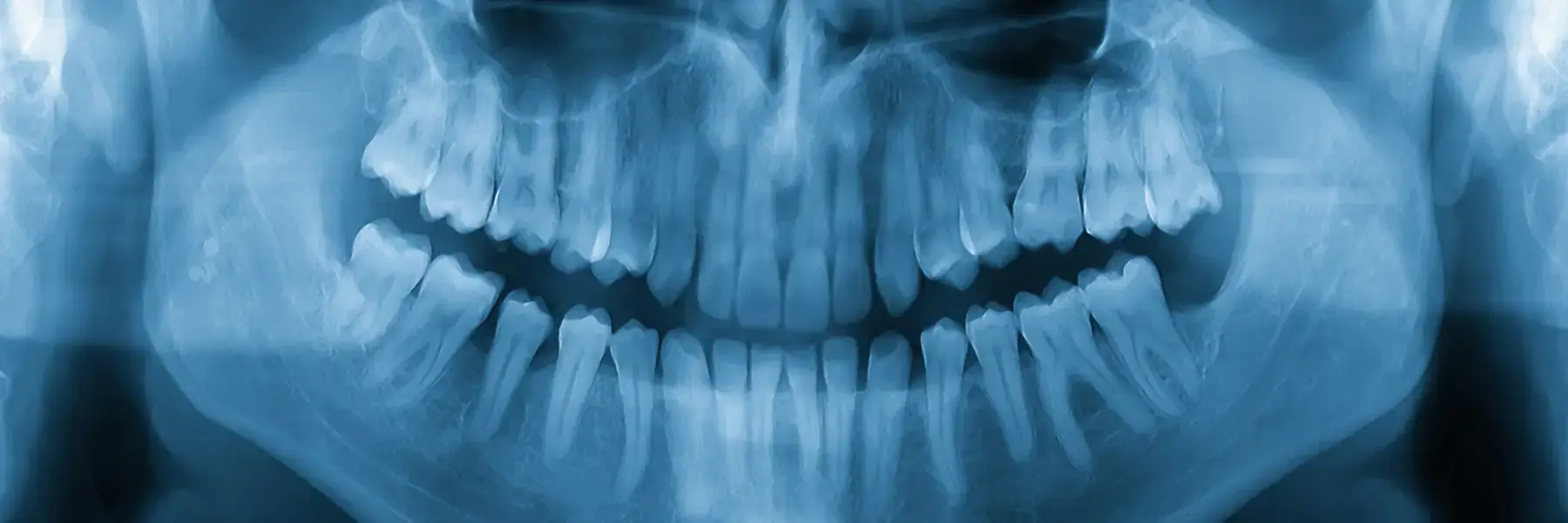
This is arguably the most important factor in the entire comparison, and it’s the one that gets the least attention.
When a tooth is lost, the jawbone beneath it no longer receives the stimulation it needs to maintain its density. Without that stimulation, the bone begins to resorb — to shrink away. This happens gradually but consistently, and it’s why long-term denture wearers often notice changes to their facial structure over time: a sunken appearance around the mouth, a shifting bite, dentures that no longer fit as well as they once did.
Dental implants are the only tooth replacement option that stimulates the jawbone the way a natural tooth root does. The titanium post fuses with the bone and actively maintains it, preventing the resorption process entirely. For patients who’ve already experienced some bone loss, a bone graft procedure may be recommended before implant placement — something our team assesses thoroughly at the consultation stage.
Who Is a Good Candidate for Implants?
Not everyone is automatically suitable for implants, and any honest dentist will tell you that upfront. The key factors assessed are:
- Jawbone density — sufficient bone must be present to support the titanium post; if not, grafting is often an option
- Gum health — active gum disease must be treated and fully resolved before implant placement; left unaddressed, it can compromise the implant entirely
- Overall health — certain conditions such as uncontrolled diabetes or blood disorders can affect healing and eligibility
- Smoking — smoking significantly impairs osseointegration and healing; patients are strongly advised to stop before and after the procedure
- Age — implants are generally suitable once jaw growth is complete, typically from the late teens onward; there is no upper age limit provided health criteria are met
It’s worth knowing that a thorough implant assessment at Acacia Dental Surgery looks at far more than just the missing tooth. Your dentist will consider your complete oral health picture — including whether any broader health concerns beyond your teeth, such as gum disease, oral cancer risk, or sleep-related issues, need attention alongside your tooth replacement. Good oral health and good general health are more connected than most people realise, and treating them together always produces better long-term outcomes.
If teeth have been missing for some time, it’s also common for neighbouring teeth to drift into the gap — which can create alignment issues that may benefit from orthodontic assessment as part of the overall treatment plan.
If implants aren’t suitable right now, or you’re not ready for surgery, dentures and other restorative solutions remain accessible, functional options. Our restorative dental care page outlines the full range of tooth replacement approaches available at Acacia Dental Surgery — including bridges, partial dentures, and full dentures — so there’s always a path forward regardless of your starting point.
The Middle Ground: Implant-Supported Dentures and All-on-4
For patients who need to replace a full arch of teeth — either upper, lower, or both — there’s a compelling third option that combines the accessibility of dentures with the stability of implants.
Implant-supported dentures (sometimes called overdentures) are secured onto two to four implant posts rather than relying on suction or adhesive. They can be removable for cleaning, but they don’t move during the day. The implants also stimulate the jawbone, addressing the bone loss concern that conventional dentures simply can’t.
All-on-4 takes this further: four strategically placed implants support a full fixed arch of teeth. It’s a single procedure with a dramatic result — particularly for patients who have been living with ill-fitting conventional dentures for years, or those facing full tooth loss. For patients in Palmerston, Humpty Doo, and Howard Springs considering this kind of advanced treatment, our overview of advanced dentistry in the Palmerston region is worth a read.
Dr. Amir and the Straumann System at Acacia Dental Surgery
Implant dentistry is a field where the skill of the clinician and the quality of the system used genuinely matter. At Acacia Dental Surgery in Coolalinga, dental implants are performed by Dr. Amir — a graduate of Sydney University with over 24 years of experience, a Fellow of the Royal Australasian College of Dental Surgeons, and holder of a Graduate Diploma in Oral Implants from Sydney University.
The implant system used is the Straumann system — one of the most researched and clinically validated systems in the world. Implants are planned and assessed using the Trios 5 digital scanner, ensuring precision at every stage. For complex cases requiring sinus lifts, augmentation, or bone grafting, the team works in close collaboration with specialist periodontists.
For patients considering implants for the first time — including older patients who may have assumed they’d missed their window — our dental implants for seniors page addresses the specific questions and concerns that come with age, including health fund eligibility and what to expect from the procedure at different life stages.
The Cost-Over-Time Reality
It’s true that dental implants cost more upfront than dentures. In Australia, a single implant typically ranges from $3,000–$6,500 depending on complexity, while a full set of conventional dentures may cost $1,500–$3,500.
But here’s the long-term picture:
- Dentures replaced every 7 years over a 20-year period = two to three full sets, plus ongoing adhesives, relining, and adjustments
- One implant, well maintained, over the same 20-year period = no replacement needed
Over time, the cost difference narrows considerably — and often reverses entirely. Understanding what your private health fund covers is worth doing before making any decision; our guide on what dental insurance covers is a practical starting point. Acacia Dental Surgery also offers payment plan options to spread the cost of implant treatment, and full details on implant costs and health fund coverage are available on our website.
So, Which Is Right for You?
There’s no universal answer — but there is a right answer for your specific situation. As a general guide:
- Implants tend to suit patients with good general health, adequate bone density, and a desire for a permanent, low-maintenance solution that protects the jawbone long-term
- Dentures tend to suit patients who prefer to avoid surgery, have significant bone loss without wanting grafting, or are working within a tighter upfront budget
- Implant-supported dentures or All-on-4 tend to suit patients needing full arch replacement who want stability and bone preservation without committing to individual implants for every tooth
The only way to know for certain is a proper assessment — one that includes imaging, a review of your broader oral and general health, and an honest conversation about your lifestyle, priorities, and budget.
Ready to Find Out Where You Stand?
A consultation at Acacia Dental Surgery in Coolalinga is relaxed, thorough, and completely obligation-free. We’ll look at your current situation honestly, explain your options clearly, and help you make a decision that makes sense for your mouth, your life, and your budget — whether that’s implants, dentures, or something in between.
Frequently Asked Questions
Q: Are dental implants worth it compared to dentures? For most patients with good bone health, implants offer superior comfort, function, and longevity. They also prevent jawbone loss. Over 10–20 years, the long-term value typically outweighs the higher upfront cost.
Q: How long do dental implants last? With proper care and regular dental check-ups, a well-placed implant can last 20–30 years or more. The crown may need replacing after 15–20 years, but the titanium post often lasts a lifetime.
Q: Can I get implants if I’ve been wearing dentures for years? Possibly, yes — though long-term denture wear often causes jawbone loss, which may require a bone graft first. A thorough assessment, including imaging, will determine what’s possible in your specific case.