

You wake up at 3 a.m. again. Your partner’s breathing has stopped – briefly, but long enough to jolt you fully awake. Then comes the sharp, gasping snore, and they roll over, completely unaware any of this happened.
Sound familiar? If you’ve been brushing it off as “just snoring,” you’re not alone – and you may not be right.
Snoring treatment in Australia is one of the most under-discussed topics in dental and general health, yet the Sleep Health Foundation reports that 1 in 5 Australians experiences a clinically significant sleep disturbance. For many, what sounds like an annoying habit is actually a nightly health crisis playing out in the bedroom.
What’s the Difference Between “Normal” Snoring and Sleep Apnoea?
Not all snoring is created equal. Here’s a useful way to think about it:
- Harmless snoring happens when relaxed throat tissues vibrate as air passes through – it’s noisy, yes, but the airway stays open and oxygen keeps flowing.
- Obstructive sleep apnoea (OSA) is something else entirely. The walls of the throat come together during sleep, completely blocking the passage of oxygen to the lungs. The brain detects oxygen deprivation and triggers a micro-awakening – often just long enough to breathe again. This can happen dozens to hundreds of times a night, robbing the body of restorative deep sleep.
The frightening part? Most people with OSA have no conscious memory of waking. They genuinely believe they slept through the night – yet their body has been in low-level crisis for hours.
If someone you live with regularly stops breathing, gasps, or chokes during sleep, that’s not snoring. That’s a medical concern worth investigating.
8 Overlooked Daytime Symptoms Darwin Residents Should Recognise
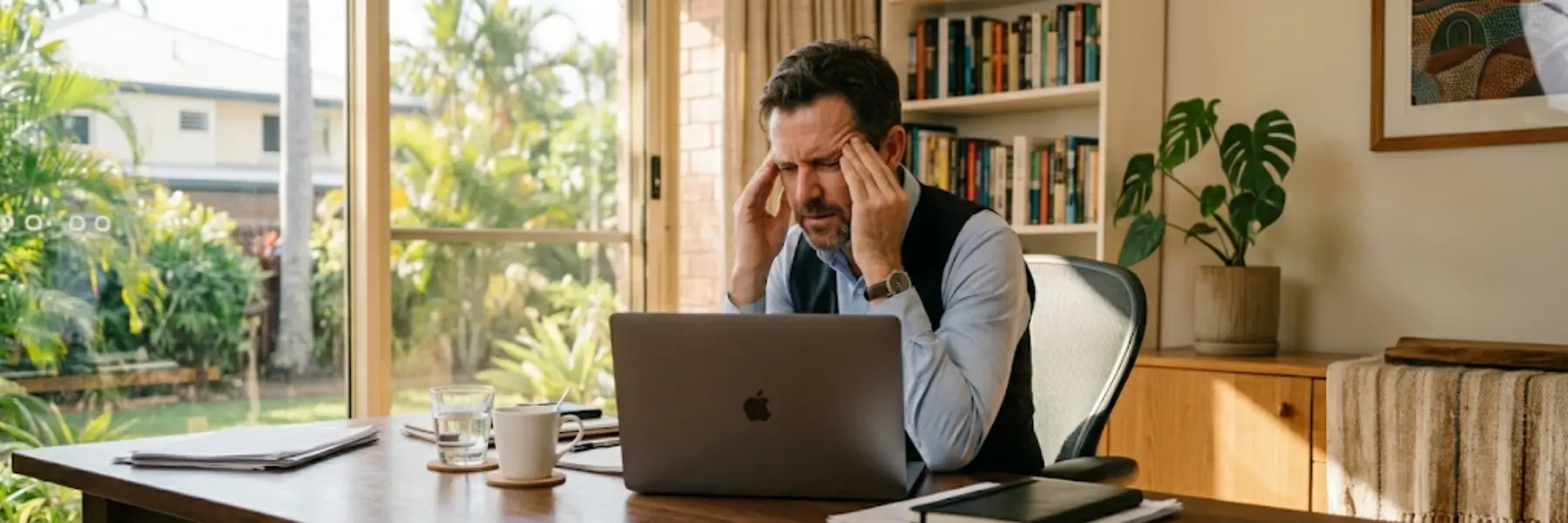
OSA doesn’t just disrupt the night. The effects bleed into every waking hour – and they’re easy to attribute to stress, age, or “being busy.” Here’s what to look out for:
- Waking exhaustion – no matter how many hours were spent in bed, you feel unrefreshed
- Morning headaches – caused by low oxygen levels overnight, these often clear within an hour or two of waking
- Difficulty concentrating at work – brain fog, forgetfulness, and poor decision-making are common OSA side effects
- Mood changes and irritability – sleep deprivation directly affects emotional regulation
- Frequent nighttime urination – waking to use the bathroom repeatedly may be your body’s stress response, not your bladder
- Dry mouth or sore throat in the morning – a sign of chronic mouth breathing during sleep
- Reduced libido – hormonal disruption from poor sleep can quietly affect energy and drive
- Falling asleep during the day – nodding off at your desk, in front of the TV, or (dangerously) while driving
Living in the Northern Territory, where long shifts in the heat are common and fatigue is easily normalised, these symptoms can go unnoticed for years. If three or more of these resonate with you or someone you love, it’s worth raising at your next dental visit.
Why Untreated OSA Is More Than a Sleep Problem
This is where “just snoring” stops being just an inconvenience. Untreated obstructive sleep apnoea is linked to a cluster of serious long-term health conditions:
- High blood pressure – repeated oxygen drops place enormous strain on the cardiovascular system
- Type 2 diabetes – disrupted sleep impairs insulin sensitivity over time
- Stroke and heart disease – the risk increases significantly in people with untreated moderate-to-severe OSA
- Depression and anxiety – the relationship between sleep disruption and mental health is well-documented
- Increased accident risk – drowsy driving is a significant road safety issue; Acacia’s own OSA page notes that sleep apnoea can meaningfully impair alertness and reaction time behind the wheel
It’s estimated that up to 2 million Australian adults are currently affected by OSA (source: Acacia Dental Surgery, citing national prevalence data). Many remain undiagnosed because they – or their partners – have accepted snoring as normal.
What Does the OSA Diagnostic Pathway Look Like in Darwin?
The process of getting diagnosed and treated is far simpler than most people expect. Here’s how it typically works for patients in Darwin and the surrounding region:
Step 1 – Raise the concern Whether it’s you or your partner who notices the signs, the first step is simply telling someone. Your GP or your dentist can both be a starting point. At Acacia Dental Surgery, we actively screen patients who mention snoring, fatigue, or related symptoms during check-ups – you don’t need a separate referral to begin the conversation.
Step 2 – Sleep study Your GP or specialist may recommend either a home sleep test (now widely available through participating pharmacies) or an in-laboratory polysomnography study. This measures your breathing patterns, oxygen levels, and sleep stages overnight to confirm whether OSA is present and how severe it is.
Step 3 – Treatment recommendation Based on your results, a treatment plan is developed. This may include lifestyle changes, positional therapy, a CPAP (continuous positive airway pressure) machine, or – particularly for mild to moderate OSA – a mandibular advancement device (MAD) fitted by a dentist.
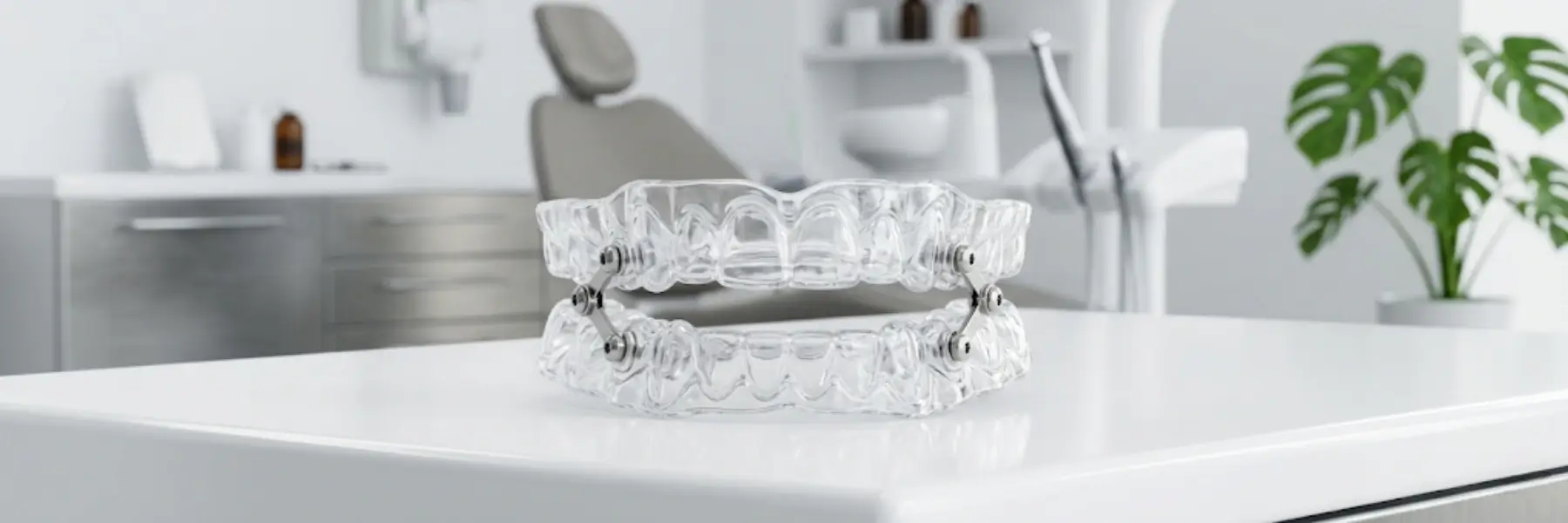
Step 4 – Dental appliance fitting If an oral appliance is recommended, your dentist takes a precise digital scan of your teeth and bite. A custom-made MAD is then fabricated in a laboratory and fitted to your mouth – typically within a few weeks. The device gently repositions your lower jaw forward during sleep, keeping the airway open and reducing or eliminating snoring.
The Australasian Sleep Association recommends MADs as a first-line treatment for snoring in dentate patients (Sarkis et al., Respirology, February 2023).
How Your Dentist Fits Into the Picture
Many people don’t realise that dentists play a central role in snoring and sleep apnoea management. It makes sense when you think about it – the mouth and jaw are at the heart of the problem.
At Acacia Dental Surgery in Coolalinga, our team is experienced in assessing obstructive sleep apnoea signs and providing oral appliance therapy for eligible patients. We use the 3D Sleep Advance appliance, a customised device designed to:
- Hold the lower jaw in a slightly forward position during sleep
- Prevent airway collapse and tissue vibration
- Reduce or eliminate snoring without bulky machinery
- Travel easily – no power source, no mask
For patients covered by private health insurance, oral appliances may attract a rebate. We’re proud to be a preferred provider for Medibank, NIB, HCF, Westfund, and CBHS – meaning you can access your benefits with greater savings. Learn more on our payment plans page.
If your situation requires CPAP or surgical intervention, we’ll coordinate with your sleep physician or GP to ensure you receive the most appropriate care for your specific anatomy and severity level.
The Simplest Thing You Can Do Right Now

If anything in this article has resonated – whether it’s your own symptoms or those of a partner who snores heavily every night – mention it at your next check-up.
It doesn’t need to be a separate, formal appointment. A quick conversation at your next routine visit is enough to get the ball rolling. Our team at Acacia Dental Surgery serves patients across Coolalinga, Darwin, Palmerston, Humpty Doo, Howard Springs, and Zuccoli.
You can also contact us or book an appointment online.
Sleep is not a luxury. It’s the foundation of everything else – your health, your mood, your relationships, your work. Don’t let a snore stand in the way of getting it right.
Frequently Asked Questions
Is snoring always a sign of sleep apnoea?
Not always. Occasional, light snoring can be harmless. However, loud, regular snoring accompanied by gasping, pauses in breathing, or daytime fatigue strongly suggests obstructive sleep apnoea and warrants professional assessment.
Can a dentist help with snoring treatment in Australia?
Yes. Dentists trained in dental sleep medicine can fit custom mandibular advancement devices – a clinician-recommended first-line treatment for snoring and mild-to-moderate sleep apnoea, as endorsed by the Australasian Sleep Association.
How do I know if I need a sleep study for snoring?
If you snore loudly most nights, wake feeling unrefreshed, experience morning headaches, or your partner reports breathing pauses, a sleep study is recommended. Your GP or dentist can initiate a referral to a home or laboratory sleep assessment.