

Most people assume tooth pain means a filling. That assumption costs Darwin patients thousands of dollars every year, because by the time they finally book an appointment, a simple filling is no longer enough. The root canal Darwin patients dread is almost always the result of putting that first appointment off. The good news? Catching this early is completely within your control.
Here’s how to know which treatment you actually need and why waiting makes both options more expensive.
What Is a Dental Filling and When Do You Need One?
A dental filling removes decayed tooth material and seals the space with composite resin or amalgam. You need one when decay is limited to the enamel or dentine and has not reached the pulp. Your dentist confirms this with an X-ray.
A filling is the right call when the damage is caught early. Common signs include mild sensitivity to sweets or cold that fades within seconds. You might see a visible dark spot or small hole with no persistent pain. There’s no pain at rest, and food catches in the same spot when you eat.
The key phrase is “fades quickly.” If the sensitivity disappears the moment the trigger is gone, the pulp is very likely still healthy. That’s a tooth that can be saved with a straightforward filling.
What Is a Root Canal and When Does It Become Necessary?
A root canal removes infected or inflamed pulp from inside the tooth, cleans the canals, and seals them to stop the infection from spreading. You need one when decay or damage has reached the nerve, when there is a dental abscess, or when pain persists long after the original trigger is removed.
The signals are different and harder to ignore. Pain that lingers more than 30 seconds after hot or cold is a key signal. So is throbbing that wakes you up at night. A pimple-like bump on the gum near the tooth, a tooth that darkens for no visible reason, or pain on biting with no obvious surface damage all point to pulp involvement.
If you’re ticking more than one of those boxes, the pulp is almost certainly involved. That is no longer a filling situation.
Root canal treatment in Darwin is also called endodontic treatment. Your dentist removes the infected pulp, shapes and disinfects the canals, then seals the tooth and typically places a crown on top to restore its full function.
How a Root Canal Works: Step by Step
Patients who know what to expect feel far less anxious going in. Here is exactly what happens during root canal treatment:
- Local anaesthetic is applied to the gum and surrounding tissue. Once the area is fully numb, you should feel no pain during the procedure.
- An access opening is created through the crown of the tooth. This gives your dentist a clear path to the root canals below.
- Infected or inflamed pulp is removed from inside the tooth using small, precise instruments.
- The canals are cleaned, shaped, and disinfected with irrigating solutions to remove all traces of bacteria and debris.
- The canals are sealed with a biocompatible filling material called gutta-percha to prevent reinfection.
- A crown is placed over the tooth at a follow-up appointment to restore its full strength and function.
Most patients leave their root canal appointment surprised at how straightforward the process was. The local anaesthetic is the same one used for a filling.
How Your Dentist Decides: What They Actually Look For
Your dentist assesses decay depth and pulp vitality alongside X-ray findings. Your symptom history matters too. If the pulp is exposed, inflamed, or already dead (necrotic), a filling will not resolve the problem no matter how well it is placed.
The Role of X-Rays in Diagnosis
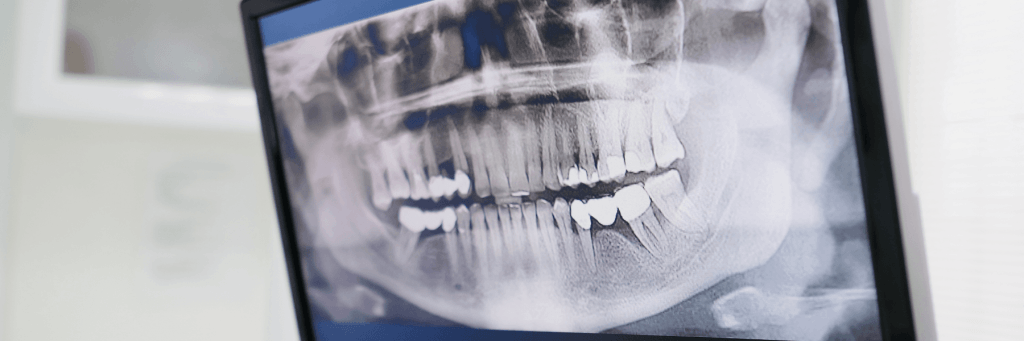
An X-ray shows how far decay has progressed into the tooth structure and whether there is any infection at the root tip. This is the single most important diagnostic tool for deciding between a filling and a root canal. The clinical exam alone is not enough.
Pulp Vitality Testing
Your dentist may apply a cold stimulus or a small electrical pulse to test whether the pulp is still responding. A healthy pulp responds and recovers quickly. An infected or necrotic pulp responds poorly or not at all. That result, combined with your X-ray, gives your dentist a clear answer.
Filling vs Root Canal: Side-by-Side Comparison
A filling takes one visit and costs significantly less. A root canal takes two or more visits and requires a crown, but it saves a tooth that would otherwise need extraction. Both are performed under local anaesthetic.
| Feature | Dental Filling | Root Canal Treatment |
| Pain during treatment | Minimal under local anaesthetic | Minimal under local anaesthetic |
| Number of visits | 1 visit | 2 to 3 visits plus crown appointment |
| Recovery time | 24 to 48 hours of mild sensitivity | A few days of manageable soreness |
| Typical cost (Australia) | Up to $275 (simple) or $475 (complex) | $1,600 to $2,400 for molars (crown additional) |
| Longevity | 5 to 15 years with proper care | Can last a lifetime with a crown |
| When it applies | Decay limited to enamel and dentine | Decay or infection has reached the pulp |
The Root Canal Reputation Problem
Root canal treatment today uses the same local anaesthetic as a filling. Most patients describe the procedure as feeling similar to getting a cavity filled. The infection before treatment is almost always far more painful than the procedure itself.
The reputation is built on procedures from decades ago. Modern rotary instrumentation and digital imaging have completely changed the patient experience.
Two Real Patient Outcomes at Acacia (Anonymised)
Patient A. A Darwin patient in his mid-forties noticed mild sensitivity in a lower molar after hot drinks. He put off booking for close to eight months, assuming it would pass. By the time he came in, an abscess had formed and the infection had spread to the surrounding bone. The tooth could not be saved. He left needing an extraction and was then facing the cost of an implant to prevent bone loss. The original filling that could have resolved his problem would have cost a fraction of what followed.
Patient B. A Coolalinga patient in her early thirties noticed cold sensitivity that didn’t quite fade in the usual few seconds. She booked a check-up within a week. The X-ray showed early-stage decay that had not yet reached the pulp. She left the same appointment with a single filling, no crown needed, and no follow-up treatment required.
The difference between these two outcomes was timing. Both patients had the same initial symptom. One acted, one waited.
Why Acacia Dental Surgery
Acacia Dental Surgery has been serving the Darwin and Coolalinga community for over 20 years. Dr. Libby Kasparek founded the clinic and has practiced here since its establishment. The current team, including Dr. Shadman Hossain, uses the latest technologies in the dental field for root canal treatment, including modern rotary instrumentation and precision imaging. Acacia is a preferred provider for major Australian health funds including BUPA, Medibank, and HCF, which means eligible patients receive maximum rebates on major dental treatment.
The numbers back this up. According to Better Health Channel (Victoria), around 90 to 95 per cent of patients who undergo root canal treatment can expect a functional tooth after the procedure. That is a strong outcome for a tooth that would otherwise be lost.
There is also a persistent myth that tooth extraction is the cheaper, easier choice. In Australia, an extraction typically runs between $180 and $350. But leaving the gap unfilled is where the real cost begins. Neighbouring teeth shift. Your bite changes. Bone loss in the jaw begins within months of an extraction. The eventual cost of implants or bridges to restore the gap can far exceed what a root canal would have cost at the time.
And there’s one more thing worth knowing: antibiotics alone will not cure a root canal infection. According to Healthdirect Australia, antibiotics do not eliminate the source of infection inside the tooth. Only the root canal procedure itself does that. Taking antibiotics may ease the symptoms temporarily, but the infection remains.
What to Expect With Costs in Darwin
Dental costs in Darwin are offset by private health fund rebates and the Child Dental Benefits Schedule. Acacia Dental Surgery is a preferred provider for major Australian health funds, which means higher-than-standard rebates on root canal treatment in Darwin.
For reference based on ADA Dental Fee Survey data, these are the typical ranges. A simple filling runs up to $275 per tooth. A complex filling can reach up to $475. A molar root canal in the Darwin area typically costs $1,600 to $2,400, not including a crown.
Children aged 0 to 17 who are eligible for the Child Dental Benefits Schedule (CDBS) may access bulk billing dental care at Acacia, including fillings and extractions, at no out-of-pocket cost.
Acacia Dental Surgery has locations in Coolalinga and Darwin. As a preferred provider for funds including BUPA, Medibank, and HCF, eligible patients receive maximum fund rebates on treatment. Call the clinic directly on (08) 8983 2780 for an itemised quote based on your specific tooth and fund.
When to Stop Waiting and Book
Early decay treated with a filling costs a fraction of a delayed root canal. Any sensitivity that does not fade quickly, pain at rest, or visible swelling near a tooth warrants a same-day or next-day assessment.
The pattern is consistent: patients who book when they first notice something wrong almost always leave with a filling. Patients who wait until the pain is unbearable almost always need a root canal and sometimes an extraction.
If you’re dealing with tooth pain in Darwin right now, or sensitivity that has not resolved in the past week, book a check-up at Acacia Dental Surgery in Coolalinga or Darwin. Same-day and emergency dental care appointments are available for patients in pain.
You can also learn more about root canal treatment in Darwin, and explore Acacia’s full general dentistry services on the website.
Frequently Asked Questions About Root Canal and Filling Treatments in Darwin
How do I know if I need a root canal or just a filling?
If sensitivity fades quickly after the trigger is removed, the decay is likely surface-level and a filling may be enough. If pain lingers more than 30 seconds or throbs at rest, the nerve is probably involved. Only an X-ray and clinical exam can confirm.
Is a root canal more painful than a filling?
No. Both procedures are performed under local anaesthetic. Most patients describe a root canal as feeling similar to getting a filling. The infection causing the pain before treatment is far more uncomfortable than the procedure itself.
Can a large filling become a root canal later?
Yes. If decay was deeper than it appeared at the time of filling, or if the tooth does not settle after treatment, the infection can progress to the pulp and require a root canal. Early diagnosis is the best way to avoid this.
How much does root canal treatment cost in Darwin?
Root canal costs in Darwin vary by tooth type and complexity. Molars, which have multiple canals, generally cost more than front teeth. Acacia Dental Surgery is a preferred provider for major Australian health funds. Your out-of-pocket cost may be significantly lower than the full fee. Call (08) 8983 2780 for an itemised quote based on your specific tooth and fund.
What happens if I leave a tooth that needs a root canal untreated?
The infection spreads. Without treatment, an abscessed tooth causes worsening pain and facial swelling. It can also cause bone loss around the tooth. Eventually it may require extraction. Antibiotics alone do not cure root canal infections, according to Healthdirect Australia.